Community
Choosing a Muslim community abroad: mosques, halal food and schools, a checklist before you move
How to judge mosques, halal assurance, schools, sermon language and daily rhythm in a Muslim-majority country before you move, with a scoring table.
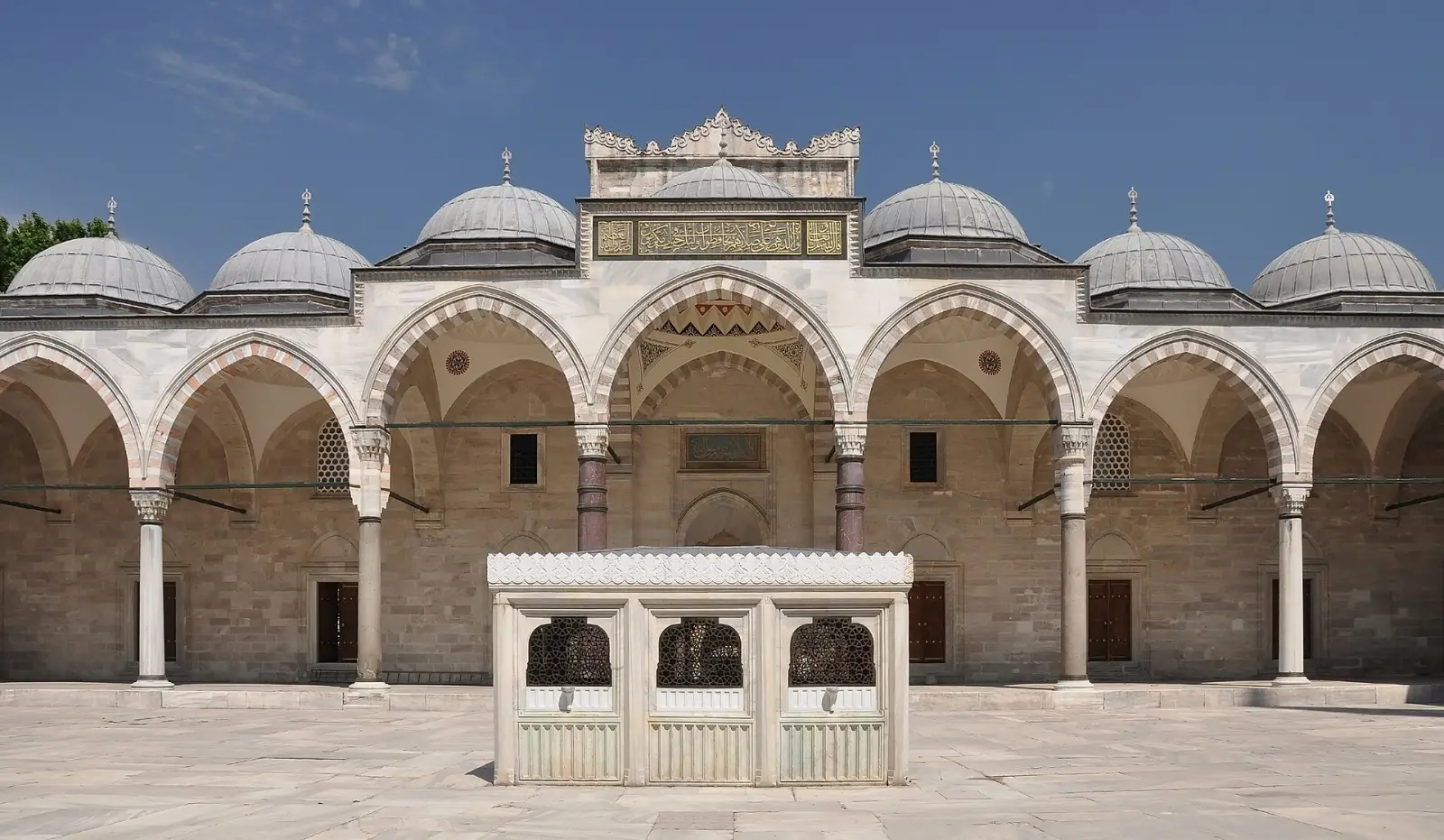
Moving to a Muslim-majority country does not guarantee that the Muslim life you want will sit within walking distance of your home. Check who regulates the mosque, which language the Friday sermon is in, and whether women have a prayer space before you sign a lease. This guide gives a method for judging that ecosystem before you commit: mosques and prayer facilities, halal assurance, schools, community and language, and the rhythm of the week. It ends with a table you can fill in for each destination you are weighing.
It is a method, not a verdict. It does not rank countries or tell you where to go, and it does not discuss visas. For the wider question of whether and how to move, see Making hijrah and What is hijrah.
Step 1: mosques and prayer facilities
Every destination has a state body that oversees religious affairs, and knowing which one tells you where to look for official information. The pages we read on 12 November 2026 show these arrangements:
| Country | Body that organises religious affairs | What we could read |
|---|---|---|
| UAE | General Authority of Islamic Affairs, Endowments and Zakat (Awqaf) | Sermon translation announced in 2018 |
| Malaysia | JAKIM at federal level, with state religious departments | JAKIM standardised sermon texts in 2025; states keep control of their own |
| Turkey | Diyanet, the Presidency of Religious Affairs | Prayer times, current sermons, about 90,000 mosques in its statistics |
| Morocco | Ministry of Habous and Islamic Affairs | Prayer times and a downloadable Friday sermon |
| Egypt | Ministry of Awqaf, with Dar al-Ifta for fatwas | Unified sermon topic policy (2016 report) |
We did not find a source we could read for the Saudi Arabian arrangements, so that destination is not covered here.
What a newcomer can check
Who runs the mosque and the sermon. In Turkey, Diyanet’s home page presents its role as managing places of worship, and its statistics list about 90,000 mosques. Its site offers official prayer times by province and district and a section of current Friday sermons, but we did not see a mosque locator on it. In Morocco, the ministry’s site shows prayer times and the current Friday sermon as a PDF, with no mosque directory visible. In Malaysia, the Minister for Religious Affairs announced on 25 February 2025 that JAKIM would standardise Friday sermon texts at federal level, while stating that state governments retain control over sermon texts and delivery in their own jurisdictions, as the New Straits Times reported. In practice, that means the sermon you hear depends on the state as well as the country. In Egypt, a 2016 report said the Ministry of Religious Endowments asked imams at least to keep to the topic of the unified Friday sermon and to a length of 15 to 20 minutes, a partial step back from an earlier rule that required a unified written text. This is an older press report, so confirm the current practice locally.
Women’s prayer areas. There is rarely a national register of which mosques have a women’s section. The one official figure we found is for Morocco: on 26 October 2026 Bladi.net reported that the ministry now sets the share of women’s areas in new mosques at 30% minimum. That is a rule for new construction, not a count of existing facilities. For any destination, ask the mosque directly whether women can pray there, whether the entrance is separate and whether it stays open on weekdays.
Language of the sermon. Most Friday sermons are delivered in the local language. The UAE’s General Authority of Islamic Affairs and Endowments announced in September 2018, with Etisalat and du, that sermon translations into English and Urdu would be available to read and listen to in its AWQAF mobile app, first phase of a plan covering several languages (Khaleej Times, citing WAM). That is a translation for the congregation, not a change of the sermon language in the hall. We did not find an official statement on the languages of Diyanet’s translations, so check the current list yourself.
Friday prayer time. The time of the Friday prayer and of the sermon is set locally or by the authority and can change. We have left specific times out; read the current time on the national authority’s page or confirm it with the mosque. Our UAE page lists the sources we followed for that country.
Step 2: halal assurance
Three questions matter: who certifies, how you can verify, and what happens to imported food.
Malaysia. The Halal Malaysia Portal describes JAKIM as the body issuing halal certificates through its MYeHALAL application system and offers a “Verify Halal Status” search, which can be filtered by category: food and beverage products, cosmetics, pharmaceuticals, medical devices, food premises, slaughterhouses, logistics and contract manufacturing. The portal also carries a list of recognised foreign halal certification bodies and a notice dated 13 March 2025 withdrawing recognition from bodies in France, Croatia and China. The practical lesson is that a halal logo on an imported product is only as good as the body behind it, and that recognition lists change. See the Malaysia page for more.
UAE. The Ministry of Industry and Advanced Technology introduced the Halal National Mark, granted by its Department of Conformity to a product, a service or a production system once it is verified against approved standards. The ministry’s page calls the mark optional, while saying that products and services that want to emphasise Sharia compliance are required to obtain it (MoIAT). When a restaurant or supplier displays the mark, you can ask for the certificate.
Turkey. Here the structure is different. Law No. 7060, published in the Official Gazette on 18 November 2017, created the Halal Accreditation Agency (HAK) and made it the only institution authorised to provide halal accreditation services in Turkey. The law says HAK accredits halal conformity assessment bodies, and Article 3(3) bars HAK from performing conformity assessment itself (law text; HAK). So a certificate you see comes from a certifier, and the question to ask is whether that certifier is accredited by HAK.
For Morocco and Egypt we did not find an official halal certification page we could read, and we say so rather than guess. In those countries, ask restaurants and butchers who certifies their meat, and ask neighbours where they buy.
On labels and in restaurants, a short routine works anywhere: identify the logo, find the body that issues it, check that body’s own register if it has one, and ask staff about the source of meat. Keep screenshots of what you verified, so your scoring in the checklist rests on evidence.
Step 3: schools
Schooling is where families most often find that the label on the door does not match the timetable. Three kinds of school are common: national curriculum schools, international schools and dedicated Islamic schools. The question is not which type is better, but how much Islamic studies and Arabic each offers, who licenses it and how you can check.
UAE. The UAE Government portal names the regulators: ADEK licenses and accredits private schools in Abu Dhabi, KHDA oversees private education in Dubai, SPEA regulates Sharjah, and the Ministry of Education oversees private schools in Ajman, Umm Al Quwain and Fujairah, with the Department of Knowledge regulating Ras Al Khaimah. In Dubai, annual inspections by the Dubai School Inspection Bureau use six ratings from Outstanding to Very Weak, and the portal links to KHDA’s school directory for the inspection reports. Check the date on each report. Our UAE page covers Islamic Studies requirements and the sources behind them.
Egypt. At the Egypt Forum on 20 October 2026 the education minister said that no student will go without studying history, Arabic and religion in any Egyptian school, and that the issue is closed, according to Egyptian Streets. The article reports that Arabic and history each count for 10% of the total score on the international certificate that is equivalent to the Egyptian secondary certificate, and mentions no exemptions. For a family choosing an international school in Egypt, that means asking how these subjects are timetabled and graded. See Egypt.
Malaysia, Turkey and Morocco. We could not read an official, current source on Islamic studies requirements or on how a newcomer checks a school’s registration in these three countries, so we state no rule. Ask the school for its registration documents, ask the ministry of education how to verify them, and ask for the weekly timetable in writing. Questions for any school:
- Which body licenses you, and what is your registration or licence number?
- How many hours a week of Islamic studies and Arabic, and in which grades?
- Is Islamic studies compulsory for Muslim pupils, and what happens for pupils joining mid-year?
- What is the language of instruction, and what support exists for children who do not speak it?
- Where can I read your latest inspection or evaluation report?
Step 4: community and language
Community is the hardest part to document and the part most often described through marketing. We found no official register of expatriate or convert associations in the pages we read, so we do not list any. That is a gap, not a verdict.
What you can do is assess community through evidence you collect yourself:
- Attend before you commit. On a trial stay, go to the Friday prayer at the mosque nearest the home you are considering, and to one weekday prayer. Note whether a translation is offered and whether newcomers are welcomed.
- Ask for introductions through the school or employer rather than relying on online groups you cannot verify.
- Test the language. Check how much daily life requires Arabic, Malay or Turkish. Ask whether the mosque or the school runs classes for adults, and what they cost. We have not listed Arabic-learning providers because we found no official list.
- Look for several sources of support. One association, one mosque or one online group is a thin base for a family; two or three independent ones are stronger.
Step 5: the rhythm of the week
The shape of the week shapes your religious life: whether Friday is a working day, when the Friday prayer falls, and how work adapts in Ramadan. These rules change and differ between employers, between public and private sectors and sometimes between regions of the same country. We have not found a source we could read today for each of the destinations, so this guide gives no weekend days or hours.
What to do: read the current rule on the official authority’s page, ask your prospective employer in writing for the weekly schedule, Friday arrangements and the working hours during Ramadan, and ask the school for its Ramadan and Friday timetable.
Step 6: the scoring checklist
Copy this table for each destination. Score each criterion from 0 to 5 for your household, write down the evidence and the date, and weight the criteria that matter most to you. Because the weights are yours, two families can reach different conclusions from the same facts, which is why we do not rank countries; see how any ranking depends on the criterion.
| Criterion | What to ask | Where to verify | Score (0-5) |
|---|---|---|---|
| Mosque within reach | How far is the nearest mosque with a Friday prayer, and is it open outside prayer times? | National religious authority site, a visit on a Friday | |
| Women’s prayer area | Is there a women’s space, a separate entrance and weekday access? | The mosque itself | |
| Sermon language | Which language is the sermon in, and is a translation available? | National authority, mosque office | |
| Who runs the mosque | Is it under the state authority or an independent committee? | Authority’s published rules | |
| Halal certification | Which body certifies food, and can I search its register? | Certifier’s own portal | |
| Halal in daily life | Where do neighbours buy meat, and do restaurants show certificates? | Shops, certificates on display | |
| School licence | Which regulator licenses the school, and is there a recent report? | Regulator’s directory | |
| Islamic studies and Arabic | Hours per week, compulsory or not, taught by whom? | School timetable in writing | |
| Language of daily life | What language do I need for work, school and the clinic? | Employer, school, a trial stay | |
| Community | Are there two or three independent groups I can join? | Visits, school parents | |
| Weekly rhythm | Weekend days, Friday prayer break, Ramadan working hours | Employer contract, official notices |
Revisit the table after a trial stay, when most answers will rest on what you have seen yourself.
Next steps
Pick one or two destinations, then read their country pages: UAE, Malaysia, Turkey, Morocco and Egypt. For cost questions, see the Dubai and Malaysia guides, and for a long-stay perspective in Malaysia, retire in Malaysia.
Frequently asked questions
How do I find a mosque before moving to a Muslim-majority country?
Start with the national religious authority, which usually publishes prayer times and the weekly Friday sermon, for example Diyanet in Turkey and the Ministry of Habous and Islamic Affairs in Morocco. We did not find an official nationwide mosque locator on the pages we read, so combine the authority's pages with the address of the mosque nearest to the home you are considering, and visit it on a Friday during a trial stay.
Are Friday sermons given in English?
Sometimes. In 2018 the UAE's General Authority of Islamic Affairs and Endowments announced English and Urdu translations of the sermon through its AWQAF app, for listening and reading, while the sermon itself in the mosque is normally in Arabic. Elsewhere, ask the mosque or the national authority whether a translation exists and in which languages.
How can I check that food or a restaurant is halal?
Look for the national certification mark or certificate and verify it with the issuing body. Malaysia's Halal Malaysia Portal has a Verify Halal Status search for products, food premises and services, and the UAE's Ministry of Industry and Advanced Technology issues the Halal National Mark. Where a country accredits certifiers rather than certifying itself, as Turkey does, ask which accredited body issued the certificate.
Is Islamic education compulsory in international schools?
It depends on the country, the regulator and sometimes the school, so ask for the written timetable. In Egypt the education minister said on 20 October 2026 that no student will go without history, Arabic and religion in any Egyptian school, and the UAE regulators set mandatory subjects by emirate. We did not find a source we could read for Malaysia or Turkey, so confirm with the school and the ministry.
What should I do if a school or mosque cannot answer my questions?
Treat unanswered questions as information. Ask the same question in writing to the school, the regulator and a current parent or congregant, and score the criterion low in the checklist until you have a verifiable answer.
Sources
- Ministry of Industry and Advanced Technology (UAE): Halal National Mark — read on 12 November 2026
- Halal Malaysia Portal (JAKIM) — read on 12 November 2026
- Turkey: Law No. 7060 on the Halal Accreditation Agency (Official Gazette 30244, 18 Nov 2017) — read on 12 November 2026
- Halal Accreditation Agency (HAK): about us — read on 12 November 2026
- Khaleej Times: Friday sermon to be translated into English and Urdu (WAM, 4 Sep 2018) — read on 12 November 2026
- New Straits Times: Jakim standardises Friday sermon texts (25 Feb 2025) — read on 12 November 2026
- Diyanet (Presidency of Religious Affairs, Turkey): home page — read on 12 November 2026
- Ministry of Habous and Islamic Affairs (Morocco): home page — read on 12 November 2026
- Bladi.net: women's areas in new mosques, 30% minimum (26 Oct 2026) — read on 12 November 2026
- Daily News Egypt: imams and the unified Friday sermon topic (11 Aug 2016) — read on 12 November 2026
- UAE Government portal: Private schools in the UAE — read on 12 November 2026
- Egyptian Streets: education minister on Arabic, history and religion in international schools (20 Oct 2026) — read on 12 November 2026
Spotted an error or an outdated rule? See our corrections policy. Corrections
Read next
 Visas and settling in
Making hijrah: a practical 12-step roadmap
A practical 12-step plan for relocating to a Muslim-majority country: goals, budget, destination, documents, residence, income, schools, timeline.
 Rankings
Best Muslim countries to live in: 14 compared on criteria you choose
Compare 14 Muslim-majority countries on sourced criteria: Muslim share, peace index, price level, income, English, long-stay routes and UK travel advice.
 Destinations
The UAE: visas, costs, schools and halal life
Residence routes, cost pointers, Islamic education in schools, Friday prayer, Ramadan hours, halal marks, health cover and FCDO advice for Muslims in the UAE.
The Hijrapass briefing
When a rule or a figure changes, you will know.
New dossiers, updated visas and cost figures, and what moved in our rankings: one short briefing, no noise.
The email briefing opens once our privacy notice is reviewed. RSS carries every update today.