Country dossier
Living in Egypt as a Foreigner: Residence, Al-Azhar, Costs and Safety
Residence permits, property-linked residency, Al-Azhar study, inflation, the pound's volatility, schools, halal rules, health insurance and FCDO advice for Egypt.
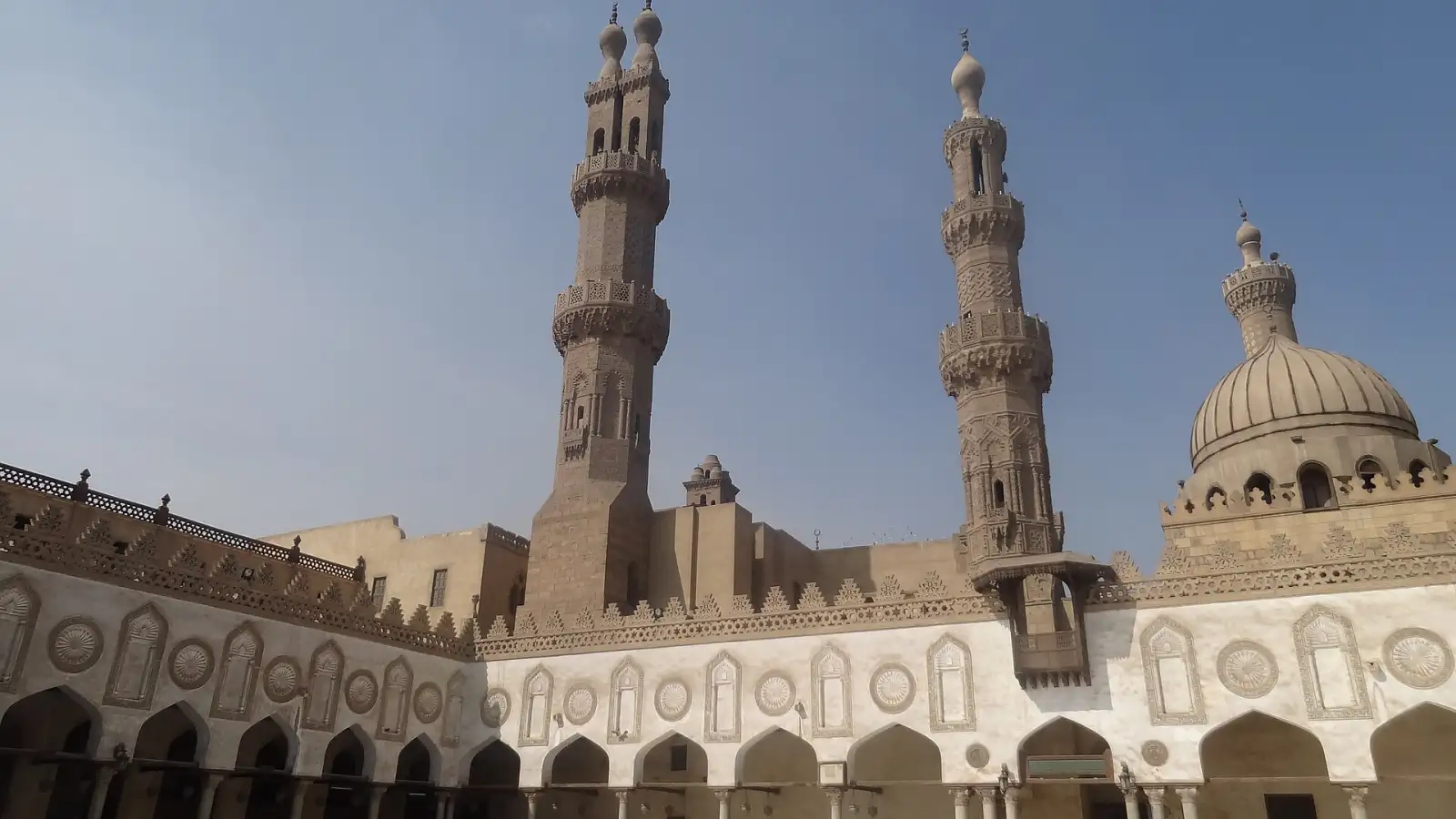
Photo: CumaliOnal, CC BY-SA 4.0, Wikimedia Commons
At a glance
- Residence authority
- General Directorate of Passports, Immigration and Nationality, Ministry of Interior (main office in Abbasiya, Cairo)
- Urban inflation, Oct 2026
- 12.7% year on year (CAPMAS), down from 13.9% in September
- Exchange rate
- CBE listing on 4 Nov 2026: about EGP 54.63 buy and 54.77 sell per USD; floating since March 2024
- Universal Health Insurance
- Phase 1 in six governorates, about 5.4 million beneficiaries at 30 April 2026; phase 2 starting in Minya
Egypt is a Muslim-majority country home to Al-Azhar, one of the oldest centres of Islamic learning, and to a large and varied foreign community. This guide pulls together what official and well-documented sources say today about residence, study at Al-Azhar, costs, schools, halal rules, health insurance and safety. It is information, not advice: rules change, residence and property-linked rules in particular, and a licensed professional should review any legal decision. Where an official page could not be opened on 12 November 2026, we say so and name the secondary source used.
Hijrapass does not call any country better than another. For a comparison by criteria, see the ranking of Muslim-majority countries, or read our guides to Turkey and Morocco.
Entry and residence permits
Residence in Egypt is handled by the General Directorate of Passports, Immigration and Nationality under the Ministry of Interior, with its main office in Abbasiya, Cairo, according to a law-firm report. Another source says applicants must complete the procedure in person there. Older sources call the same body the Immigration and Nationality Administration. Official pages were not retrievable, so the points below come from legal and expatriate guides.
- Tourist entry is not residence. Work or study cannot be done on a tourist visa; those activities require a residence permit.
- Categories listed by commercial guides: work, student, family reunification, investor or property, retirement, and permits for refugees. A special ten-year card exists for foreigners born in Egypt, according to one guide.
- Student permits are described as required for foreign students enrolled in Egyptian institutions for more than 30 days. Guides disagree on timing: one says to apply within 30 days of arrival or before the entry visa expires, whichever is earlier, another says consulates do not issue student visas, so the application follows entry. Student permits are often issued per semester and a holder may not be permitted to work on them.
Fees and rules have changed over time and some guides quote different currencies, so we publish no fees.
Residency linked to property or deposits
Egypt has promoted residency routes for foreigners who buy property or place a deposit. Published figures conflict, and none of the sources we read cites the decree text itself:
| Source (secondary) | Figure reported |
|---|---|
| Andersen Egypt | Minimum USD 200,000 property from licensed developers, with at least USD 100,000 paid to the developer before applying |
| Invest-Gate (reporting a Housing Ministry official) | Residency if the full price of a finished unit is paid, or at least USD 100,000 down payment on an under-construction unit |
| IMI Daily | USD 50,000 property for a one-year permit; USD 100,000 deposit in a state-owned bank for a three-year permit |
| Global Investments (updated June 2026) | USD 100,000 property value for a five-year renewable permit |
A Rio Times piece of September 2026 says the routes rest on a ministerial decree of March 2023 that amended a 2019 decree, and a Mondaq piece from March 2026 advises checking current practice against the latest administrative requirements. For this reason, Hijrapass publishes no single threshold. Confirm with the Ministry of Housing, the Ministry of Interior or an Egyptian law firm. Nothing here suggests that you should apply for a route.
Studying Arabic and at Al-Azhar
Al-Azhar admits international students through its foreign students portal, which publishes the admission rules and the scholarship form. Applicants must meet both Al-Azhar’s and Egypt’s admission rules and submit complete documents before the deadline (typically a certified school certificate, passport copies and photos). Some countries announce scholarship seats, often limited to Islamic studies or Shari’ah-related fields, through their own education ministries. Because requirements and deadlines differ by country and year, check with Al-Azhar and with the Egyptian cultural and educational office in your home country. We do not quote a scholarship package here: the only figures we found come from a blog, which we do not treat as sufficient.
A student who is enrolled must hold a student residence permit (see above). We did not find an official source that lets us compare Arabic-language centres, so we list none.
Costs and the pound
Official data come from the Central Agency for Public Mobilization and Statistics (CAPMAS). Reported in the press on 10 November 2026, annual urban headline inflation was 12.7% in October 2026, down from 13.9% in September and the third consecutive monthly fall. Monthly urban inflation was 0.7%, and annual core inflation, reported by the Central Bank of Egypt, was 13.1%.
The pound is volatile. Egypt has let the exchange rate float since March 2024. The Central Bank of Egypt’s listing on 4 November 2026 showed about EGP 54.63 buy and EGP 54.77 sell per US dollar (the page’s tables are ambiguous, so check the CBE site for the figure you need). Press reports say the dollar passed EGP 55 on 23 October 2026 and EGP 56 at some banks soon after, and that before the regional conflict it traded near EGP 48. Any dollar budget should assume it can move within days. We give no rent levels: we found no official, verified rent series.
Schools
The Ministry of Education and Technical Education oversees private and international schools. Recent rules reported in the press include: a ban on transfers into third-year secondary at international schools from 2026/2027; a 2024 decree making Arabic, religion and national education compulsory and part of the final grade; a ministerial ban on collecting tuition in foreign currency, with tuition subject to ministry approval; and, from April 2026, central ministry stamping of American Diploma certificates. We did not find rules specific to foreign pupils, so ask each school and the ministry’s private-education administration about admission, curriculum and fees.
Religious life
Al-Azhar’s mosque and university are a centre of Islamic learning. We did not retrieve an official source on the number of mosques or the work of the Ministry of Awqaf, so we state no figures. Differences of opinion among scholars on whether and when to emigrate are covered in our guide to making hijrah.
Halal context
Egypt regulates halal certification of imported food. According to the US Department of Agriculture and other reports, in 2021 ISEG Halal was named the only recognised certifier for all food products and factories; a December 2023 decree opened the door for other international certifiers to be accredited, and the company later changed its trade name to Halal-ALQAHIRAH. In May 2025 the prime minister said imported dairy would no longer need halal certification. These rules concern imports; we found no official source on halal retail inside Egypt.
Healthcare and insurance
Egypt is rolling out a Universal Health Insurance System (UHIS) in phases. Phase 1 covers six governorates (Port Said, Ismailia, Suez, South Sinai, Luxor and Aswan) and had around 5.4 million beneficiaries at 30 April 2026. Phase 2 starts in Minya, and the nationwide target was brought forward to 2027 from the original 2032. We found no source on whether foreign residents can enrol, so we make no claim. Hijrapass does not recommend any insurance product.
Safety
UK FCDO (read 12 November 2026, last updated 27 October 2026): the FCDO advises against all travel to North Sinai and within 20 km of the Libya border (except El Salloum, where only essential travel is advised). It advises against all but essential travel to northern South Sinai beyond the St Catherine-Nuweibaa road (excluding coastal areas), the eastern Ismailiyah Governorate, the Western Desert (with listed exceptions including Luxor, Aswan, Abu Simbel, Faiyum and Siwa), and the Hala’ib Triangle and Bir Tawil Trapezoid. It also warns that regional tensions are unpredictable, that borders with Israel and Palestine, including Taba, could close at short notice, and that the Rafah crossing is closed. Travelling against FCDO advice may void insurance. See the full FCDO advice and the US State Department advisory.
Settling in: the first 90 days
We cannot give a personalised checklist, but a family planning a move can organise the first three months around the points that official or well-documented sources make:
- Confirm your status before you rely on it. Tourist entry does not allow work or study, so find out which residence category applies and where the directorate’s procedures start.
- Plan for currency moves. With the pound floating, check the Central Bank of Egypt rate before committing to dollar-priced rent, tuition in foreign currency (which private schools may not collect) or large purchases.
- Check the map. Compare your intended region against the FCDO’s list before you sign a lease or book school places.
- Ask schools for admission rules and the Arabic and religion requirements that now count toward the final grade.
- Verify health arrangements in writing, since eligibility for the public scheme for foreigners is not established in the sources we found.
Questions to put to official sources
The Ministry of Interior (residence categories, fees, documents), the Ministry of Housing or an Egyptian law firm (property-linked residency), Al-Azhar’s foreign-student office (admission and deadlines), the Central Bank of Egypt (rates), and each school are the right places for the points we could not settle. The methodology page explains how Hijrapass chooses and dates its sources.
Frequently asked questions
How do foreigners get a residence permit in Egypt?
Residence is handled by the General Directorate of Passports, Immigration and Nationality under the Ministry of Interior, whose main office is in Abbasiya, Cairo. Commercial guides list categories such as work, student, family reunification, investor or property, and retirement. We could not retrieve the ministry's own pages, so confirm categories and documents with the directorate.
Can I get residency by buying property in Egypt?
Egyptian residency linked to property ownership or a bank deposit exists, but published figures differ widely across secondary sources, from USD 50,000 to USD 200,000 depending on the permit and source. We could not read the official decree, so we publish no single amount; confirm with the Ministry of Housing or an Egyptian law firm. This is information, not advice.
Can foreigners study Arabic or Islamic sciences at Al-Azhar?
Al-Azhar admits international students, and some countries announce scholarship seats through their own education ministries. Rules, fields and deadlines differ by country, so apply through the channels Al-Azhar publishes for foreign students.
Is the Egyptian pound stable?
No. Egypt has had a floating rate since March 2024. The Central Bank of Egypt's listing on 4 November 2026 showed about EGP 54.63 buy and 54.77 sell per dollar, while press reports said bank rates passed EGP 55 and EGP 56 in late October 2026. Budgets set in dollars can therefore change in a short time.
Does the UK advise against travel to parts of Egypt?
Yes. The FCDO advises against all travel to North Sinai and within 20 km of the Libya border (except essential travel to El Salloum), and against all but essential travel to several other areas. It was last updated on 27 October 2026.
Sources
- UK FCDO — Egypt travel advice — read on 12 November 2026
- Andersen Egypt — Residency permits for foreigners (secondary source) — read on 12 November 2026
- Andersen Egypt — Egyptian residency by investment (secondary source) — read on 12 November 2026
- Invest-Gate — Government unveils requirements for granting residency to foreign homebuyers (secondary source) — read on 12 November 2026
- IMI Daily — Egypt residence by investment (secondary source) — read on 12 November 2026
- Mondaq — How to obtain a student residence in Egypt (secondary source) — read on 12 November 2026
- Al-Azhar — foreign students portal — read on 12 November 2026
- Enterprise — Egypt's urban inflation slowed to 12.7% in October (CAPMAS data) — read on 12 November 2026
- Arab Finance — Egypt annual headline inflation in October 2026 — read on 12 November 2026
- Central Bank of Egypt — exchange rates — read on 12 November 2026
- Egyptian Streets — US dollar surpasses EGP 55 for the first time — read on 12 November 2026
- Ahram Online — US dollar surpasses EGP 56 at Egyptian banks — read on 12 November 2026
- Ahram Online — Egypt to ban third-year secondary transfers to international schools from 2026/2027 — read on 12 November 2026
- USDA FAS — Egypt's halal certification and policy — read on 12 November 2026
- Ahram Online — Egypt's UHIS covers 92.4% of South Sinai residents in H1 2026 — read on 12 November 2026
- Zawya — Egypt prepares to extend universal health insurance to Minya — read on 12 November 2026
Spotted an error or an outdated rule? See our corrections policy. Corrections
Read next
 Destinations
Morocco: residence, costs, schools and Muslim life
What official sources say about residence cards, entry rules, inflation, schools, mosques, health insurance and safety for foreigners living in Morocco.
 Destinations
Turkey: residence, costs, schools and halal life
Residence permits, citizenship-by-investment thresholds, inflation, health insurance, halal oversight, earthquake preparedness and safety for Muslim families in Turkey.
 Rankings
Best Muslim countries to live in: 14 compared on criteria you choose
Compare 14 Muslim-majority countries on sourced criteria: Muslim share, peace index, price level, income, English, long-stay routes and UK travel advice.
The Hijrapass briefing
When a rule or a figure changes, you will know.
New dossiers, updated visas and cost figures, and what moved in our rankings: one short briefing, no noise.
The email briefing opens once our privacy notice is reviewed. RSS carries every update today.