Analysis
Hijrah: meaning, history and modern usage
What hijrah means in Arabic, the Prophet's migration to Madinah in 622 CE, the Hijri calendar, the hadith on intentions and how the word is used today.
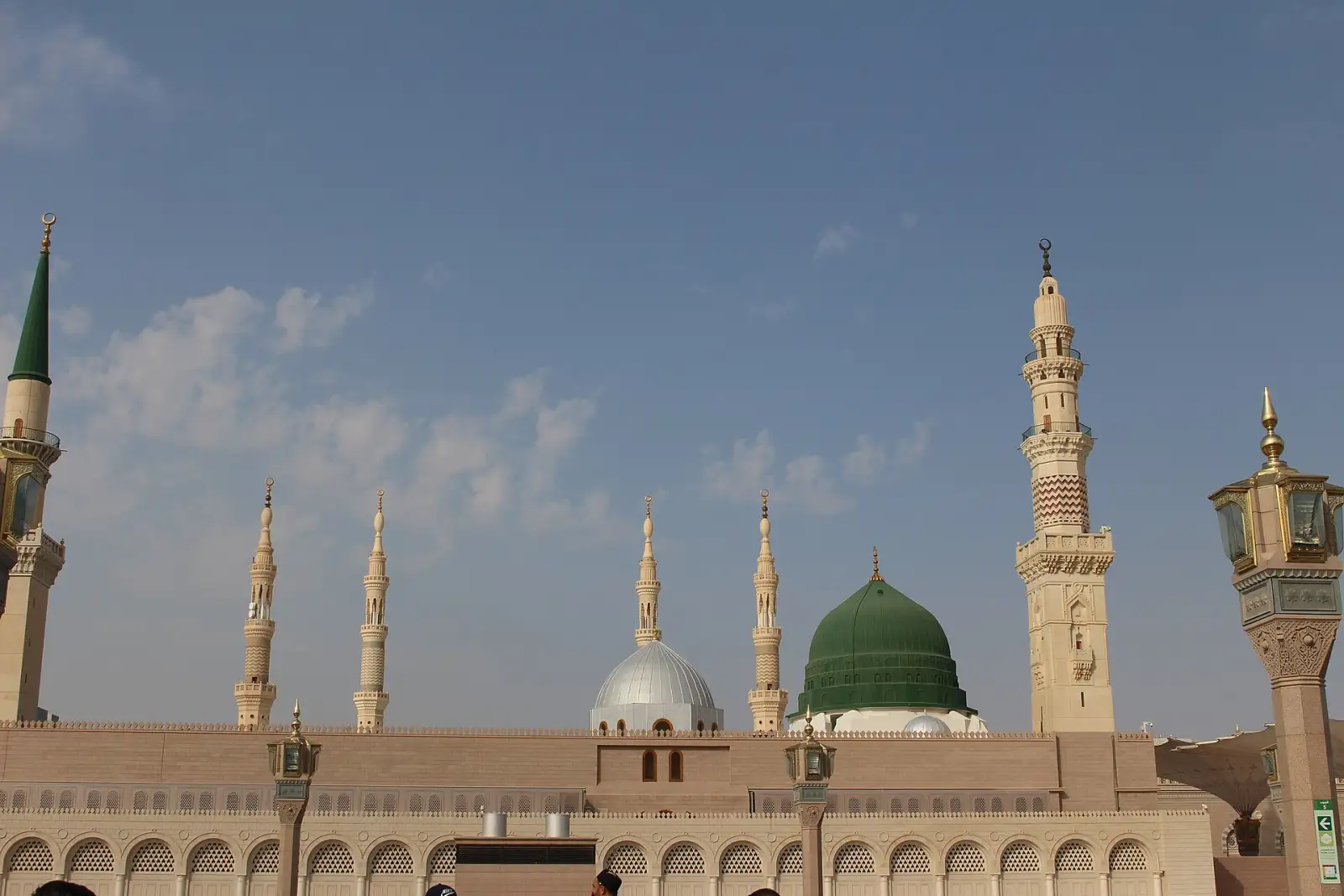
Hijrah is one of the most important words in the Islamic vocabulary. It names the event that opened a new era for the early Muslim community, it gives the Islamic calendar its starting point, and today it is also the word many families use when they talk about relocating to a Muslim-majority country. This guide explains the word, the history behind it, its spiritual meaning and how it is used now. It also sets out, without choosing between them, the views scholars hold on whether and when relocation is required.
The meaning of hijrah
Hijrah (Arabic هجرة, also written hijra) comes from the three-letter root h-j-r. The verb hajara is glossed in reference works as to cut oneself off from, to avoid association with, or to depart; the related form hājara (the root of muhājir, “emigrant”) describes leaving a place and its ties. In English the word is commonly defined as migration or departure, and it has been used in English since the eighteenth century for an exodus.
Two related words appear throughout the sources:
- Muhājir (plural muhājirūn): a person who makes hijrah. In the early community the Muhājirūn were the Makkan Muslims who moved to Madinah.
- Anṣār (“helpers”): the people of Madinah who received them. The Qur’an praises both groups in 59:8-9.
A note on a different word
The South Asian term “hijra” is unrelated to the Islamic concept: it refers to a community of transgender, intersex and eunuch people, as described in this reference entry. The rest of this page uses hijrah only in its Arabic, Islamic sense.
The first migration: Abyssinia
Before the move to Madinah, a smaller group of Muslims left Makkah for the Christian Aksumite kingdom in the Horn of Africa, which Islamic sources call Abyssinia and whose ruler they call the Najashi (Negus). Accounts based on Ibn Ishaq place the first group, of about fifteen people, in roughly 615 CE, with an estimate of 613 CE in some modern summaries; a larger second group followed. The sources differ on exact dates and numbers, and a careful reader should treat the figures as approximate.
The account reports that Ja’far ibn Abi Talib (ra) spoke for the Muslims before the Najashi when Quraysh sent envoys to demand their return, and that the group was allowed to stay. Some of them returned to Makkah and later travelled on to Madinah; others remained in Abyssinia and reached Madinah later, in the period Watt dates to 628 CE. This episode matters in the discussion below because scholars cite it when they consider whether Muslims may live under non-Muslim rule.
The hijrah to Madinah, 622 CE
The best-known hijrah is the Prophet’s ﷺ move from Makkah to Madinah (then called Yathrib), about 420 km to the north. In summary, as given in standard historical accounts:
- After meetings at al-’Aqabah near Mina with delegates of the Aws and Khazraj tribes of Madinah, the way was prepared for the Muslim community to settle there.
- In May 622 CE, the Prophet ﷺ left Makkah secretly, accompanied by Abu Bakr (ra).
- The two sheltered for three days in a cave on Mount Thawr, a short distance south of Makkah, before taking the route to Madinah with a guide.
- On arrival the Prophet ﷺ founded the mosque at Quba on the outskirts of Madinah, remembered as the first mosque in Islamic history, before settling in the city.
- Most of the other Makkan Muslims moved over the following months.
Historians give the year as 622 CE. The month in the Islamic calendar is Rabi’ al-awwal, although the exact day is uncertain in the sources. Do not confuse the day of departure with the calendar epoch: the first day of the Hijri year corresponds to 16 July 622 CE in the Julian calendar, which is a calendar convention rather than the date of the journey.
How the Hijri calendar began
The Hijri calendar takes its name and its first year from the hijrah. According to the standard account, the caliph Umar ibn al-Khattab (ra) introduced the era around 638 CE (17 AH) after Abu Musa al-Ash’ari (ra), an official in Basra, noted that official letters carried no dates. After consulting his advisers, Umar chose the year of the Prophet’s arrival in Madinah as year one. The account is summarised in the encyclopaedic entry on the Islamic calendar.
Dates in the era are written AH, from the Latin Anno Hegirae. The calendar is lunar, so its years are shorter than solar years and its months move through the seasons.
The spiritual meaning of hijrah
Alongside the historical migration, the sources use hijrah for an inward change. Three texts are central.
1. The hadith of intentions. In the opening hadith of Sahih al-Bukhari (Bukhari 1, also Muslim 1907), narrated by Umar ibn al-Khattab (ra), the Prophet ﷺ said that deeds are judged by intentions and each person receives what they intended. He then gave an example from hijrah itself: whoever migrated for Allah and His Messenger, his migration is for Allah and His Messenger, while whoever migrated for worldly gain or to marry a particular woman, his migration is for that purpose. The point scholars take from it is that the same outward act can have very different value depending on the intention behind it.
2. The true muhajir. In Bukhari 10, narrated by ’Abdullah ibn ’Amr (ra), the Prophet ﷺ said that a Muslim is one from whose tongue and hands other Muslims are safe, and that a Muhajir is one who gives up what Allah has forbidden. Teachers often use this hadith to describe a personal, spiritual hijrah that is open to every believer wherever they live: leaving sins, harmful habits and wrongdoing.
3. Hijrah after the conquest of Makkah. In a hadith reported in Bukhari 2783 and Muslim 1864, the Prophet ﷺ is reported to have said that there is no hijrah after the conquest, but only striving and intention. Commentators explain this in different ways. A Hanafi answer on IslamQA.org by Suhail Motala summarises the common reading that migration to Madinah stopped being obligatory once Makkah became part of the Muslim lands, while the reward of hijrah can still be earned through sincere intention. The same answer reports al-Tibi’s view that leaving one’s home for a good purpose, such as seeking knowledge, still counts. How far this hadith bears on modern relocation is one of the questions on which scholars differ, as described next.
The Qur’an also discusses migration. Surah al-Nisa 4:97-100 speaks of people who wronged themselves by not leaving a place where they could not practise their faith, asks “Was not the earth of Allah spacious enough for you to emigrate therein?”, exempts those truly unable to leave (the weak, women and children) and promises reward to those who migrate for Allah. Scholars read these verses in different ways, as the next section shows.
Modern usage: relocating to a Muslim-majority country
In everyday English, “making hijrah” now commonly means that a Muslim person or family moves from their country of residence to a Muslim-majority country. People give a range of reasons: a wish for an environment where the call to prayer, Ramadan, halal food and Islamic schooling are part of ordinary life; family or work opportunities; or the practical question of raising children. Others use the word for a move within the Muslim world, or in a looser spiritual sense that involves no travel at all.
The word does not carry any single legal meaning in this modern usage. Whether a particular move is called hijrah, and what religious weight the person attaches to it, is for the individual to decide with advice from qualified scholars. This site uses the phrase simply as a convenient name for relocation to a Muslim-majority country, and it takes no position on any individual’s religious obligation. The two pages that follow from this one are practical: the 12-step roadmap and the interactive country comparison.
What scholars say about whether relocation is required
Fiqh note. This section reports that scholars hold different views. It does not choose between them, it is not a fatwa, and it is not complete. If you are deciding whether relocation applies to you, speak to qualified scholars who can hear your circumstances.
There is no single position. The summaries below are as published by the institutions named, read on 12 November 2026.
Classical framework: three situations
A widely quoted classical framework comes from Ibn Qudamah’s al-Mughni (vol. 8, p. 457; vol. 9, p. 236). As presented in an IslamQA.info answer (no. 131586), which also quotes Shaykh Ibn ’Uthaymeen, it distinguishes:
- those able to migrate who cannot practise their religion openly, for whom migration is described as obligatory;
- those who are unable to migrate because of illness, compulsion or weakness, for whom it is not obligatory (citing Qur’an 4:98-99);
- those who can practise openly but whose migration might benefit the Muslims, for whom it is described as recommended.
The same answer sets conditions for living in a non-Muslim country, including firm faith and the ability to perform religious duties openly, and notes that living abroad may also be undertaken for da’wah. An IslamWeb fatwa takes a similar line, stating that migration to Muslim lands is obligatory for those who are able to do so and cannot practise their religion openly where they are.
The Yaqeen Institute: a spectrum of rulings
In a paper published on 30 July 2025, Dr Osman Umarji of the Yaqeen Institute for Islamic Research writes that many legal opinions hold that migration is not obligatory for a Muslim who can practise openly and does not fear for their religion, and that the ruling can move across a range depending on circumstances: from obligatory for someone who cannot practise and is losing their faith, to recommended for someone who fears losing their faith or their children’s, to permissible for someone who simply prefers a larger Muslim environment, to discouraged or forbidden where leaving would mean abandoning family duties. The paper adds that there is “a diversity of legal opinions” whose detail it does not set out, and it draws on Ibn al-Qayyim’s idea of the “migration of the heart” as an obligation on everyone. It recommends consulting people of knowledge.
The European Council for Fatwa and Research
The ECFR’s fatwa on permanent residence in a non-Muslim country states that it is lawful to live there, pointing to the early Muslims in Abyssinia. It also says a Muslim must not live among non-Muslims in a way that compromises or discards their Islamic identity, except where they are overpowered and have no other option. If the environment threatens a person’s life or religion, the fatwa says it is incumbent to move to a land that does not pose such a threat. The page listing the fatwa shows a publication date of 18 August 2023; the fatwa text itself carries no issue date.
Dar al-Ifta al-Misriyyah
Egypt’s Dar al-Ifta, in an article on refugees and welfare, states that under Shari’ah there is no objection to residing in European and non-Muslim countries. The page shows no date for the answer. It does not address hijrah by name in the text read, and it should be taken as one institution’s position on residence rather than a full treatment of relocation.
Where the views diverge
Put side by side, the sources agree on some points and part on others:
| Question | Views reported in the sources above |
|---|---|
| Can a Muslim live in a non-Muslim-majority country? | Yes, with conditions (ECFR, Dar al-Ifta, IslamQA.info), and not required to leave if able to practise openly (Yaqeen summary of many opinions) |
| When is leaving described as obligatory? | When a person cannot practise openly and is able to leave (IslamQA.info, IslamWeb, ECFR in cases of threat to life or religion) |
| Is leaving ever recommended? | Yes, in some situations, for example to benefit the Muslims or to strengthen faith (al-Mughni framework as cited; Yaqeen) |
| What of persons unable to leave? | Not obliged (al-Mughni framework as cited, with reference to Qur’an 4:98-99) |
These are summaries of what the named sources publish, not rulings made by this site. Institutions also differ in method, in the weight they give to a person’s family responsibilities, and in how they apply the old categories of lands to the modern world. The sources named here are only a part of a much larger body of scholarship, and other qualified scholars may hold other views.
Practical points that follow from the guide
Whatever view a person follows, the practical work of a move is the same, and much of it is entirely separate from fiqh: choosing a destination, understanding the residence rules, finding schooling and healthcare, and planning the money. The 12-step roadmap walks through these in order, and the comparison page lets you sort fourteen Muslim-majority countries by the criteria you choose.
Frequently asked questions
What does hijrah mean in Islam?
Hijrah (also spelled hijra) is an Arabic word from the root h-j-r that means to leave, to move away from or to migrate. In Islamic history it refers above all to the Prophet's migration from Makkah to Madinah in 622 CE; in a spiritual sense it also means leaving what Allah has forbidden.
When did the hijrah of the Prophet happen?
The Prophet ﷺ left Makkah for Madinah in 622 CE, with Abu Bakr (ra) accompanying him. The Islamic calendar counts its years from this event, and its first day corresponds to 16 July 622 CE in the Julian calendar.
Who started the Hijri calendar?
The second caliph, Umar ibn al-Khattab (ra), is reported to have introduced the era around 638 CE (17 AH), choosing the year of the Prophet's arrival in Madinah as year one.
Is hijrah to a Muslim country obligatory?
Scholars hold different views, and this site does not decide between them. Positions range from obligatory for someone who cannot practise their religion openly, to recommended, to not required. Anyone considering the question should consult qualified scholars who know their situation.
Is the South Asian word 'hijra' the same thing?
No. In South Asia, 'hijra' is an unrelated term used for a community of transgender, intersex and eunuch people. This guide is about the Arabic, Islamic word hijrah.
Sources
- Wikipedia, Hijrah (etymology, route, Quba, Hijri era) — read on 12 November 2026
- Wikipedia, Islamic calendar (introduction under Umar) — read on 12 November 2026
- Wikipedia, Migration to Abyssinia (citing Ibn Ishaq) — read on 12 November 2026
- Wikipedia, Hijra (South Asia) — read on 12 November 2026
- Sahih al-Bukhari 1, sunnah.com — read on 12 November 2026
- Sahih al-Bukhari 10, sunnah.com — read on 12 November 2026
- Sahih Muslim 1864, sunnah.com — read on 12 November 2026
- Sahih al-Bukhari 2783, sunnah.com — read on 12 November 2026
- Sahih Muslim 1907, sunnah.com — read on 12 November 2026
- Qur'an 4:97-100 — read on 12 November 2026
- Qur'an 59:8-9 — read on 12 November 2026
- IslamQA.org (Hanafi), what is meant by intention in the hadith 'no hijrah after the conquest' (Suhail Motala) — read on 12 November 2026
- Yaqeen Institute, Thinking about Making Hijra? (Osman Umarji, 30 July 2025) — read on 12 November 2026
- IslamQA.info, answer 131586 (quoting Ibn 'Uthaymeen and al-Mughni) — read on 12 November 2026
- IslamWeb, fatwa 84163, Living in a Non-Muslim Country — read on 12 November 2026
- European Council for Fatwa and Research, permanent residence in a non-Muslim country (IslamOnline fiqh section) — read on 12 November 2026
- Dar al-Ifta al-Misriyyah, refugees living off the welfare system in non-Muslim countries — read on 12 November 2026
Spotted an error or an outdated rule? See our corrections policy. Corrections
Read next
 Visas and settling in
Making hijrah: a practical 12-step roadmap
A practical 12-step plan for relocating to a Muslim-majority country: goals, budget, destination, documents, residence, income, schools, timeline.
 Rankings
Best Muslim countries to live in: 14 compared on criteria you choose
Compare 14 Muslim-majority countries on sourced criteria: Muslim share, peace index, price level, income, English, long-stay routes and UK travel advice.
The Hijrapass briefing
When a rule or a figure changes, you will know.
New dossiers, updated visas and cost figures, and what moved in our rankings: one short briefing, no noise.
The email briefing opens once our privacy notice is reviewed. RSS carries every update today.